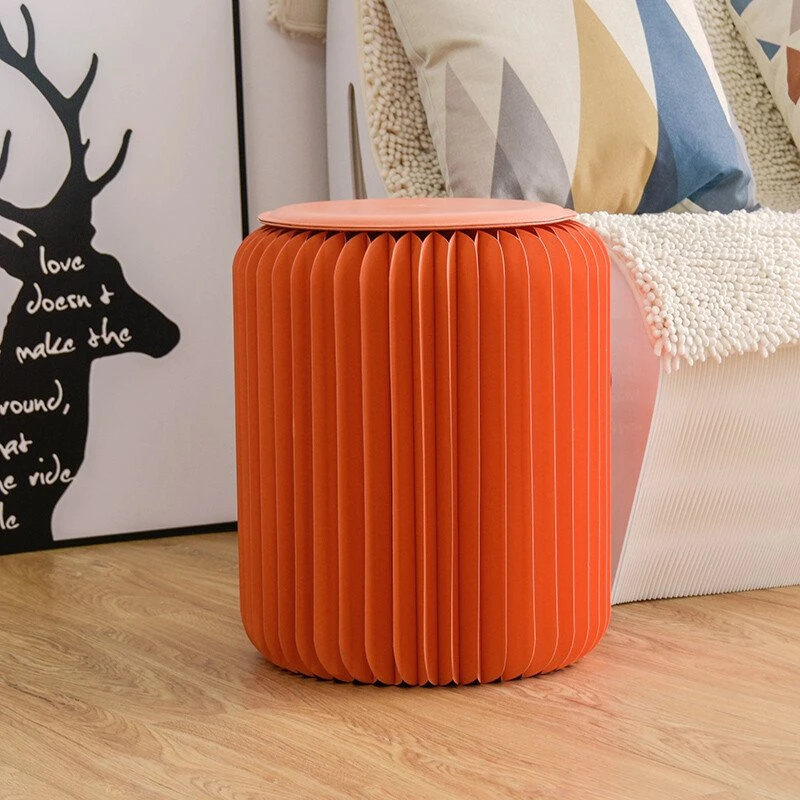
Do Not Assume Paper Furniture Is Weatherproof
A paper stool or display may be light, foldable and easy to move, but those qualities do not make it suitable for outdoor exposure. Paper-based structures can respond differently to humidity, condensation, splashes and direct rain. Surface treatments may change the behavior of a product, but a coating should not be treated as proof that the complete item is waterproof.
Paper furniture should only be used outdoors when the exact model is documented for the intended exposure and the buyer follows its approved use and care instructions. If the supplier has not confirmed outdoor suitability, treat the product as an indoor item.
The phrase “outdoor use” is also too broad for a quotation. A covered patio, a short event under a marquee and an exposed garden installation are very different environments. Define the exposure before asking the supplier for a recommendation.
Classify the Outdoor Environment Before Selecting a Product
Start by describing where the product will be placed and for how long. This gives the supplier a clearer basis for reviewing materials, finish, packaging and any available test information.
| Use environment | Main exposure to consider | Buyer action |
|---|---|---|
| Indoor use | Normal indoor handling and storage | Follow the product’s standard care instructions |
| Covered outdoor area | Humidity, wind and occasional damp air | Confirm suitability for the specific covered environment |
| Temporary outdoor event | Dew, accidental splashes, wind and ground moisture | Confirm the permitted duration and weather conditions |
| Fully exposed outdoor area | Rain, prolonged moisture, sunlight and temperature changes | Do not use unless the exact product is documented for these conditions |
A roof does not eliminate all moisture risks. Open sides can allow wind-driven rain, and condensation may occur even when the product is not directly rained on. Ground contact can also matter if the surface is wet.
Give the supplier the expected location, duration, season, surface and whether the product can be moved indoors when weather changes.
Understand the Main Risks: Water, Humidity and Ground Contact
Moisture can affect different parts of a paper-based product. The paper layers may soften or change shape; adhesive joints may respond differently; printed or coated surfaces may show marks; and the product may be harder to return to its original folded condition.
The risk depends on the paper grade, construction, adhesive, finish and exposure. Do not assume that a product described as “moisture resistant” can withstand direct rain or standing water.
Ask the supplier:
- Which part of the product has been tested for moisture exposure?
- Was the finished product tested, or only a raw material or surface coating?
- What were the humidity, water contact and exposure duration?
- Was the product inspected immediately afterward and after drying?
- Did the test check shape, bonding, surface finish and assembly?
- What care or drying instructions apply if the product becomes damp?
A moisture claim should be tied to a defined test or use condition. If the supplier cannot provide that information, plan the product for a dry indoor or protected setting rather than assuming a weather rating.
Consider Sunlight, Temperature and Wind as Separate Conditions
Outdoor suitability is not only about water. Direct sunlight can affect visible color and some finishes over time. Temperature changes may influence adhesives or other components. Wind can move a lightweight product or make a display unstable even when the paper itself is not damaged.
For a project that includes outdoor placement, define:
- Whether the product will be in direct sun or shade.
- How many hours per day it will be exposed.
- Whether the display is temporary or remains assembled for a long period.
- Whether wind protection or a separate approved support is required.
- Whether the product can be secured without modifying its structure.
- Whether the supplier has evidence for the actual temperature or UV exposure.
Do not attach weights, stakes or other supports unless the product design allows them. A modification can change the load path or damage the paper structure. Ask the supplier to confirm any anchoring or support method before using it.
A Coating Does Not Automatically Make the Complete Product Waterproof
Buyers sometimes hear that a paper product has a protective finish and assume it can be used outdoors. That conclusion may be too broad. A coating may improve one surface property without protecting the edges, joints, underside, opening mechanism or any exposed paper core.
If a coating is proposed, confirm:
- Which surfaces receive the treatment.
- Whether edges and joints are also protected.
- Whether the treatment changes the appearance, color or feel.
- Whether the finish has been tested on the complete product.
- Whether it affects folding, opening, bonding or storage.
- Whether the finished product can still be handled and disposed of as described.
If the product is marketed with a water-resistant or waterproof claim, ask for evidence supporting that exact claim and the stated conditions. Avoid using the words “waterproof” or “all-weather” in product listings unless the claim is substantiated for the complete model.
How to Evaluate an Outdoor-Use Sample
A sample review should reproduce the environment as closely as practical, but it should not replace a formal test where the project requires one. Agree the test conditions with the supplier before the sample is exposed to moisture, sunlight or other stress.
Record:
- Exact product reference and sample revision.
- Opened dimensions and assembly method.
- Location and exposure conditions.
- Duration of exposure.
- Whether the product was exposed to rain, spray, humidity, direct sun or ground moisture.
- Changes in shape, bonding, finish, color and closure.
- Whether the product remained within its intended-use instructions after the exposure.
Do not conduct an improvised test and then describe the product as weatherproof. A sample observation applies only to the tested sample and conditions. A product-level claim needs appropriate evidence and a defined acceptance standard.
Plan Transport, Storage and Event Contingencies
Even when a paper product is intended for a protected outdoor event, the logistics plan should keep it dry and prevent compression or edge damage before setup.
Ask the supplier to confirm the folded dimensions, individual protection, carton material, units per carton and gross weight. Check whether the product should remain in its carton until shortly before use. If the event may be affected by rain or high humidity, define an indoor backup location and a method for moving the product without damaging it.
For retailers and event suppliers, storage instructions should be part of the product information. A product that is stored in a damp warehouse or left on a wet floor may be damaged before the customer uses it.
If the environment cannot be controlled, consider a product made from a material that is documented for the exposure rather than trying to adapt a paper product beyond its approved conditions.
Outdoor Paper Furniture Buyer Checklist and FAQs
Before approving paper furniture for an outdoor or semi-outdoor project:
- [ ] The location and duration of use are clearly described.
- [ ] Covered, temporary and fully exposed conditions are distinguished.
- [ ] The exact model’s outdoor or moisture suitability is confirmed in writing.
- [ ] Any water-resistant, waterproof or UV-related claim has supporting evidence.
- [ ] Edges, joints, closure parts and the underside are included in the assessment.
- [ ] Wind, stability and any approved support method are considered.
- [ ] Storage, transport and care instructions are agreed.
- [ ] A backup plan exists if the weather changes.
Frequently Asked Questions
Can a paper stool be used on a covered patio?
Only if the exact model is approved for the expected humidity, wind and accidental moisture exposure. A covered area is not automatically a dry indoor environment.
Is moisture-resistant paper furniture waterproof?
Not necessarily. Moisture resistance and waterproof performance are different claims. Ask what was tested, which parts were exposed and what conditions the product can tolerate.
Can I apply a waterproof coating myself?
Do not modify the product without the supplier’s approval. A coating may affect bonding, folding, finish or other components, and it does not automatically protect the complete structure.
Will sunlight fade paper furniture?
Color and finish behavior depend on the paper, print, coating and exposure. Ask for model-specific evidence if the product will remain in direct sunlight.
What is the safest assumption when outdoor suitability is unknown?
Treat the product as intended for dry indoor use until the supplier provides written confirmation for the required environment.
Outdoor suitability is a product-specific requirement, not a general property of paper furniture. Explore the LuckinDecor paper furniture range or contact the team with the location, exposure duration and intended use before placing an order.