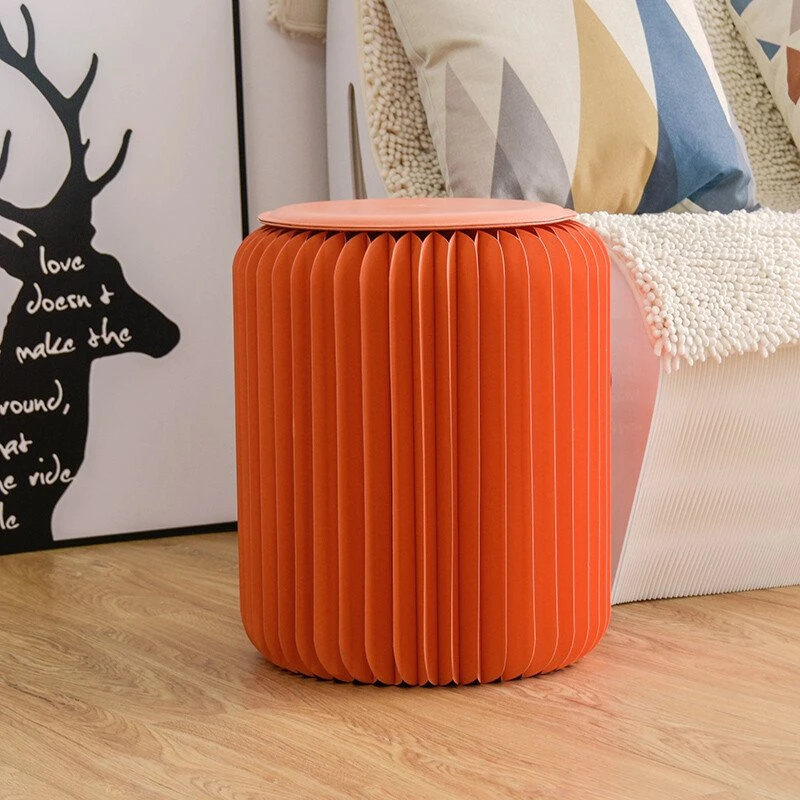
Durability Depends on the Product and Its Intended Use
“Is paper furniture durable?” is a reasonable question, but it is too broad to answer with a simple yes or no. A paper display used for a short retail campaign has a different job from a stool used repeatedly by customers. A product stored flat between events faces different demands from one that remains assembled for months.
The important distinction is between the material name and the performance of the finished product. A paper structure may be carefully engineered for a particular use, but the buyer still needs evidence for that model, its dimensions and its approved assembly.
Paper furniture should be judged against its intended use and model-specific performance evidence—not against a general claim that honeycomb paper is strong or that a product is lightweight.
Before comparing suppliers, define the product’s job: what it will support, how often it will be opened or moved, where it will be used and how long it needs to remain in service. Those details determine which durability questions matter.
Break Durability into Separate Performance Questions
Durability is not one test result. A product may perform well under one condition and still be unsuitable under another. For procurement, separate the evaluation into several dimensions.
| Durability dimension | What it evaluates | Buyer question |
|---|---|---|
| Static load | A defined load applied for a stated period | What load, position and duration were used in the test? |
| Stability | Resistance to tipping, shifting or uneven support | Was the finished product tested on a level surface and in its approved configuration? |
| Repeated use | Performance after repeated loading or assembly cycles | How many cycles were completed and what was inspected afterward? |
| Compression or deformation | Whether the structure changes shape under load | Was permanent deformation measured after unloading? |
| Moisture exposure | Behavior in the stated humidity or damp conditions | What exposure conditions were tested, and what changed? |
| Surface wear | Abrasion, scuffing, print or coating damage | Which surface was tested and against what acceptance criteria? |
| Transport handling | Damage during packing, handling and shipment | Was the packaged product checked after the relevant handling test? |
Not every product needs every test. The correct evidence depends on the product type and use. A tabletop display and a seat should not be evaluated using the same acceptance criteria.
Understand Static Load, Repeated Load and Stability
A headline load figure can be misleading if the test conditions are not stated. A static test may apply a load in one position for a defined time. It does not automatically prove that the product will tolerate repeated sitting, uneven loading, side pressure or movement across a floor.
For a paper stool intended for seating, request the following information:
- The exact model, dimensions and production configuration tested.
- The load applied and how it was distributed across the seat.
- The duration of the test and whether the load was static or repeated.
- The number of samples tested.
- The measured deformation, visible damage or other observations.
- The acceptance criteria and the result.
- The test date and the organization or laboratory that conducted it, if applicable.
A stability check should also reflect the product’s actual geometry and intended floor surface. If a cushion, locking part or support panel is required, the test should use that configuration.
Do not compare two load claims unless the test method, sample configuration and acceptance criteria are sufficiently similar. A number without a test description is not a reliable basis for selecting a supplier.
Check Repeated Opening, Closing and Assembly
Foldable and expandable paper products have a use pattern that a static load test may not cover. The buyer should understand whether the product is designed to be opened once, folded occasionally or assembled and stored repeatedly.
During sample review, follow the supplier’s instructions and observe:
- Whether the product opens to the same shape each time.
- Whether the closure or fastening parts align correctly.
- Whether the paper structure shows tearing, delamination or loose bonding.
- Whether the product remains stable after the approved assembly.
- Whether the folded product can be stored without crushing exposed edges.
If repeated use is part of the project, ask whether the supplier has a cycle test or another documented evaluation for the exact model. Do not invent a cycle count or assume that a product designed to fold can be folded indefinitely.
For an event or retail program, also consider who will assemble the product. A design that requires careful alignment may need clearer instructions or a different pack-out from a product intended for quick setup.
Moisture, Humidity and Storage Can Change the Result
Paper-based products should not be assumed to be waterproof. Humidity, condensation, splashes and direct water exposure may affect paper layers, adhesive joints, printed surfaces or the shape of the product. The degree of risk depends on the exact material and any surface treatment.
Ask the supplier to distinguish between:
- Normal indoor storage.
- Short-term use in a humid environment.
- Occasional contact with damp hands or surfaces.
- Direct splashes or rain.
- Long-term exposure to outdoor conditions.
A description such as “moisture resistant” is incomplete without a definition of the exposure and the test evidence behind it. Ask what was tested, how long the exposure lasted, which components were inspected and what level of change was accepted.
Storage matters too. Confirm whether products should be kept flat, dry, away from direct sunlight and protected from compression. A suitable storage instruction can prevent damage before the product is even put into use.
Inspect the Finished Construction and the Vulnerable Points
A close inspection should focus on the parts most likely to affect performance. For an expandable paper structure, these may include the bonding points, edges, top and bottom panels, closure components and any area where the product is handled during opening.
Use a consistent sample checklist:
- Core consistency: Are the cells or folds regular, with no obvious crushed or separated areas?
- Bonding: Are the joined layers secure, with no visible separation?
- Edges: Are exposed paper edges protected or finished as specified?
- Panels: Are the top and bottom components aligned and firmly attached?
- Closure: Do the clips, magnets or other fasteners work as shown in the approved instructions?
- Surface: Are there scratches, dents, print defects or visible finish differences?
- Dimensions: Does the opened product match the approved sample?
- Packing: Does the retail and export pack protect the vulnerable areas?
The inspection should be recorded against the sample and the order specification. Photographs are useful, but they should identify the product reference and the point being checked.
Match the Product to the Application Before Ordering
A durable product is one that performs its intended job under the agreed conditions. It is not necessarily suitable for every application.
| Intended application | Main durability concern | What to confirm |
|---|---|---|
| Short-term event display | Assembly, handling and surface appearance | Setup instructions, pack protection and reuse expectations |
| Retail display | Stability, appearance and repeated customer interaction | Display load, base support and care limits |
| Occasional seating | Load, stability and seat-surface condition | Seating designation, test evidence and approved assembly |
| Repeated public seating | Repeated loading, stability and wear | More comprehensive model-specific performance evidence and maintenance guidance |
| Storage or transport | Compression, moisture and edge damage | Folded dimensions, storage conditions and carton protection |
If the product is not documented for seating, do not use it as a chair or stool. If a buyer needs repeated public use, the specification should reflect that duty rather than relying on a general product photograph.
What to Put in a Durability-Focused RFQ
A supplier can only evaluate durability against a defined application. Include the following details in the request:
- Product reference or drawing.
- Intended use and whether the product will support people or display items.
- Required dimensions and configuration.
- Expected frequency of opening, closing or moving.
- Approximate use environment, including humidity or outdoor exposure.
- Required load or performance criteria, if the buyer has them.
- Any available test report or sample requirement.
- Retail packaging, shipping destination and target delivery date.
Ask the supplier to identify which statements are supported by a test report and which are general product descriptions. If a required test has not been conducted, record that clearly rather than treating an estimate as verified performance.
Paper Furniture Durability: Buyer Checklist and FAQs
Before approving a paper furniture model, check that its durability requirements are clear:
- [ ] The intended use and expected frequency are defined.
- [ ] The exact model and tested configuration are identified.
- [ ] Load, stability and repeated-use evidence are reviewed where relevant.
- [ ] Test method, duration, sample count and acceptance criteria are stated.
- [ ] Moisture and storage limits are documented.
- [ ] Vulnerable edges, joints, panels and closures are inspected.
- [ ] The approved sample and care instructions are retained.
- [ ] Packaging protects the product during transport.
Frequently Asked Questions
Can a paper stool support an adult?
That depends on whether the exact model is designed for seating and what its test evidence shows. Do not infer a safe load from the honeycomb appearance or from a different product’s claim.
Does honeycomb paper automatically make furniture strong?
No. Core geometry is only one part of the construction. Paper grade, bonding, orientation, panels, closure and assembly all affect the finished product.
Is paper furniture suitable for repeated use?
Some designs may be intended for repeated opening or use, while others may be designed for a more limited application. Ask for model-specific instructions and relevant cycle or performance evidence.
Can paper furniture be used in humid environments?
Suitability depends on the exact materials, adhesive and finish. Request documented exposure conditions and follow the product’s storage and care instructions.
What is the most important durability document to request?
There is no single document for every product. For seating, request the applicable load and stability evidence. For displays, request information relevant to the intended display load, stability and handling conditions.
Durability is a specification question, not a slogan. Explore the LuckinDecor paper furniture range and share the intended use so the right model-specific information can be reviewed.