Struggling to get a manufacturer to understand your vision for a new piñata? You're not alone. Many buyers worry that their unique idea will get lost in translation, leading to samples that miss the mark on quality, function, or design. A vague request often results in costly delays and prototypes that just aren't right. The solution is a comprehensive custom piñata design brief, which acts as a precise roadmap to transform your concept into a manufacturable product, ensuring everyone is on the same page from day one.
A strong custom piñata design brief should include detailed visual references, precise dimensions and weight capacity, material and color specifications (like Pantone codes), packaging requirements, quantity estimates, and crucial commercial context such as your target market and required safety standards (e.g., ASTM F963, EN71). This document is the single most important tool for communicating your commercial intent and technical requirements to a manufacturer, preventing costly errors and ensuring the final product meets your expectations.
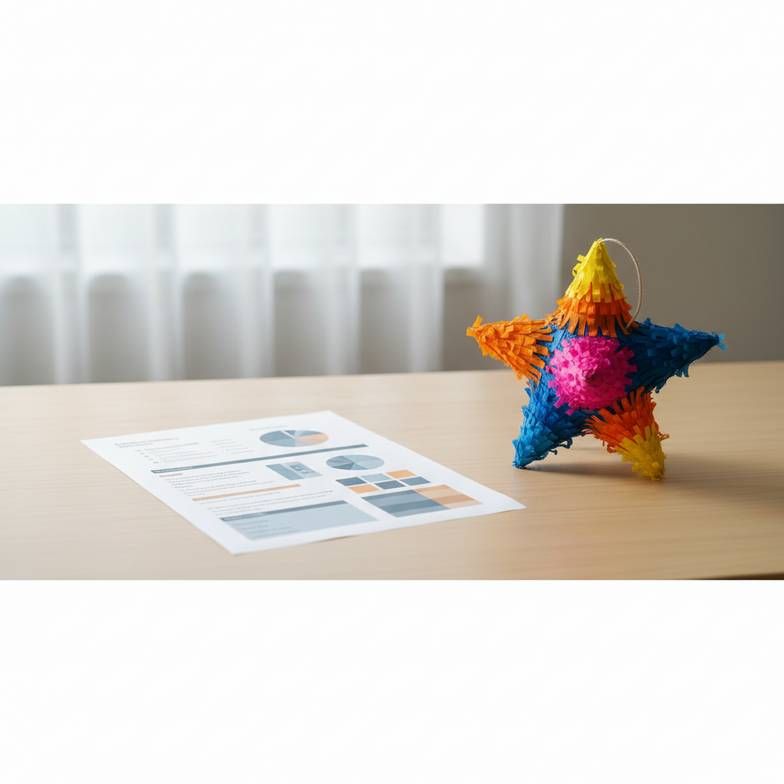
Think of your design brief as more than just a set of instructions; it's the start of a critical conversation. A well-prepared brief allows us, as your manufacturing partner, to provide valuable feedback, flag potential issues, and even suggest cost-saving alternatives. Let’s break down what makes a brief truly effective.
Why is a Visual Reference Not Enough for a Custom Piñata Design Brief?
You’ve found the perfect inspiration photo or sketched out a brilliant design. It seems obvious, right? But I’ve seen many projects get delayed because the sample came back the wrong size, used flimsy paper, or had colors that were just a little off. A picture is a starting point, but without specifics, you're leaving too much open to interpretation.
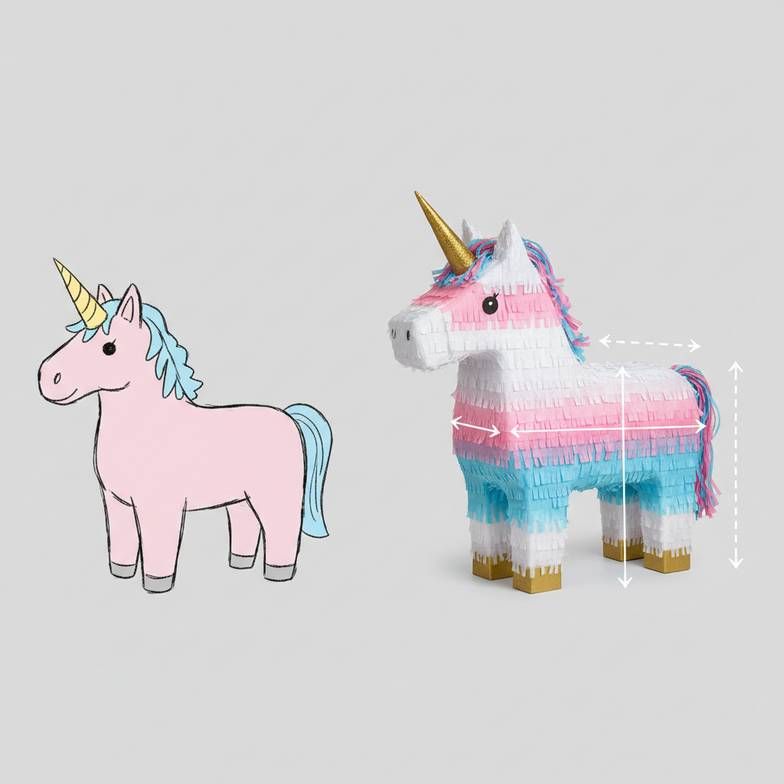
A visual reference shows the concept, but it doesn't communicate the concrete details needed for production. To avoid guesswork, your custom piñata design brief must translate the image into a set of technical parameters a factory can build and quote against accurately.
Dive Deeper: From Ambiguity to Actionable Specs
A reference image is essential, but it's only one piece of the puzzle. To get a sample that matches your vision in both form and function, you need to provide quantifiable data. Here’s what we look for to supplement your visuals:
Quantify Dimensions and Structure
Instead of saying "a large donkey piñata," provide exact dimensions in centimeters or inches (e.g., 55cm length x 40cm height x 15cm width). This clarity is critical for several reasons:
- Accurate Quoting: Material consumption and labor are directly tied to size. Precise dimensions allow us to calculate an accurate unit cost.
- Structural Integrity: The size and shape influence the internal cardboard structure needed to support the piñata's weight, especially once filled.
- Shipping Logistics: Dimensions determine how many units fit into a master carton and, ultimately, a shipping container. This has a huge impact on your final landed cost. A common question we get from buyers is how to optimize size for shipping, and providing dimensions early on lets us have that conversation.
Specify Colors with Pantone Codes
Computer and phone screens display colors differently. The "bright blue" on your monitor might look like a muted navy or a light sky blue on our end. To ensure color accuracy, always use a standardized color matching system.
- The Pantone Matching System (PMS) is the industry standard. Providing a Pantone code (e.g., "Pantone 293 C" for a specific blue) removes all ambiguity. It tells our tissue paper suppliers the exact shade to produce or match.
- This is especially important for branded products where color consistency is part of your brand identity.
Describe Materials and Desired "Feel"
The materials dictate the piñata's durability, appearance, and price point.
- Cardboard: Do you need a thick, sturdy gray board for a piñata that can take a beating, or is a standard corrugated cardboard sufficient?
- Tissue Paper: Specify if you need standard crepe paper, shiny metallic foil, or iridescent film. The choice affects both the look and the cost.
- Feel & Finish: If you don't know the exact material names, describe the intended quality. Phrases like "premium feel for a boutique store" or "cost-effective for a discount chain" give us the context to recommend appropriate materials.
How Does Commercial Context Impact Your Custom Piñata Design Brief?
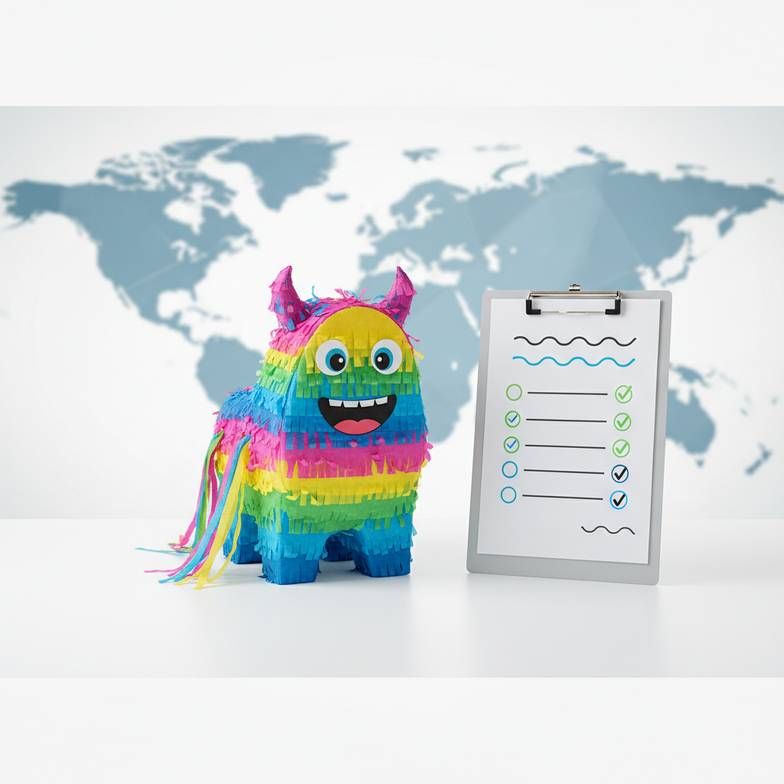
You’re laser-focused on getting the design, colors, and shape perfect. But if the final product isn't compliant with your market's safety laws or doesn't match your customers' quality expectations, the design won't matter. You could be left with inventory you can't legally sell or that gets returned by unhappy customers.
Including commercial information in your custom piñata design brief is not extra work; it's essential risk management. This context helps the manufacturer select the right materials, apply the correct construction methods, and ensure the product is aligned with your specific business goals from the very beginning.
Dive Deeper: Aligning Production with Your Business Goals
Telling us where and how you plan to sell the piñata is just as important as telling us what it should look like. This information shapes key production decisions that affect safety, cost, and marketability.
Target Market and Safety Compliance
This is non-negotiable. The materials and construction of a piñata must comply with the safety regulations of its destination country or region.
- United States: Products sold in the U.S. typically need to comply with ASTM F963, which sets standards for toy safety, including flammability and toxic substances in materials like paper and glue.
- European Union: The EU requires products to meet EN71 standards, which have their own specific requirements for safety.
- When we know the target market upfront, we can ensure that we source compliant materials from the start, avoiding catastrophic failures during third-party lab testing. We've seen projects stopped dead in their tracks because a buyer assumed compliance was automatic; it must be specified.
Intended Sales Channel and Perceived Value
Where will the end customer buy this piñata? The answer changes our production approach.
- Boutique or Specialty Retailer: These channels command higher prices and expect higher quality. This means we might use thicker cardboard, more intricate tissue paper layering, and more robust packaging.
- Mass-Market or Discount Retailer: Here, cost is paramount. We might suggest design simplifications or more cost-effective materials to meet a specific price point without sacrificing core safety and function.
- Online Seller: For e-commerce, durability during shipping is key. The piñata needs to withstand being handled by multiple carriers and arrive at the customer's door intact.
Functional Requirements and Target Age Group
A piñata is not just a static decoration; it has a job to do!
- Candy Capacity: How much weight should it hold? Specify an estimated filling weight (e.g., "must hold up to 2 kg / 4.4 lbs of candy"). This dictates the strength of the hanging loop and the internal structure.
- "Breakability": This is a surprisingly tricky balance. A piñata for a 4-year-old's party should break more easily than one for a group of 10-year-olds. Tell us the target age range so we can adjust the construction to create the right level of fun and challenge.
What Role Does Packaging Play in the Design Brief?
You’ve designed the perfect piñata, and the sample looks amazing. But then the bulk order arrives, and you find a significant number of units are crushed, torn, or damaged. Or, perhaps they arrive safely but look underwhelming on a retail shelf because the packaging was an afterthought.
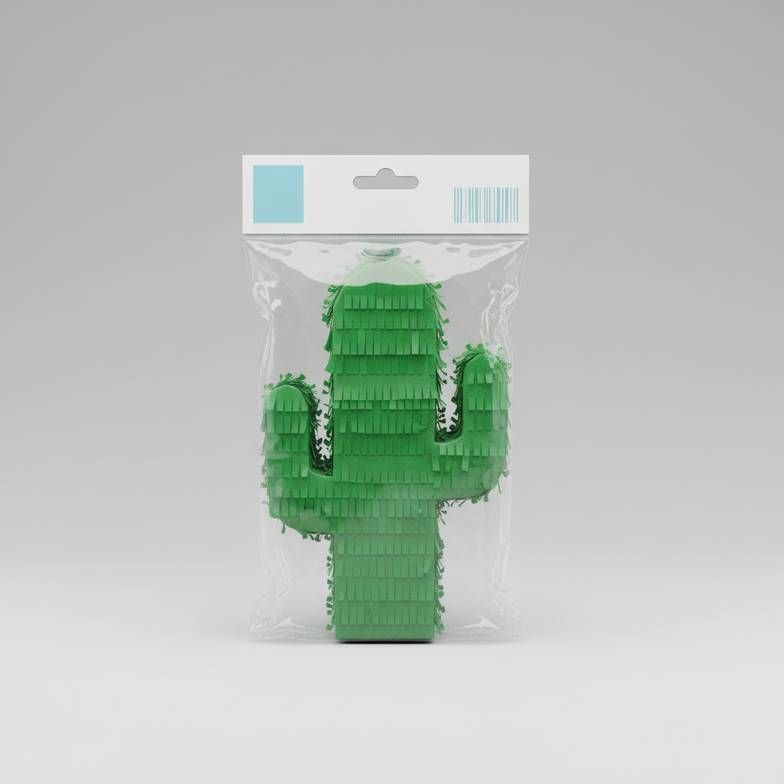
Defining your packaging needs early in the custom piñata design brief is crucial for protecting your investment and maximizing its retail potential. Good packaging ensures your product arrives safely, meets retailer requirements, and communicates your brand's quality to the end consumer.
Dive Deeper: More Than Just a Box
Packaging does much more than just contain the product. It’s your product’s first line of defense during transit and its first impression on the customer in a store. Here’s what to consider for your brief.
Protecting Your Investment During Transit
Piñatas are bulky and relatively delicate. The journey from our factory in China to your warehouse is a long one.
- Individual Packaging: Will each piñata be in its own polybag, or do you prefer a shrink-wrapped option? This protects it from dust and moisture.
- Master Cartons: This is the outer box that holds multiple units. You should specify the carton quality (e.g., 5-ply corrugated cardboard for strength), maximum weight, and any required markings (shipping marks, country of origin, model numbers). We can help you determine the optimal carton size to maximize container space and reduce freight costs.
Retail-Ready Packaging Requirements
If your piñatas are going directly to a retail environment, the packaging needs to work for the store.
- Barcodes: Provide the UPC or EAN barcode numbers and specify where they should be placed (e.g., on a sticker, hang tag, or printed on a header card).
- Hang Tags & Header Cards: These are great for branding and displaying product information. Provide the design files, including your logo, product name, and any marketing copy.
- Warning Labels: Specify any required safety warnings (e.g., "Not for children under 3 years," plastic bag suffocation warning) and the languages they should be in, based on your target market. Many major retailers have strict guidelines on this.
Balancing Cost, Protection, and Presentation
There's always a trade-off between packaging options.
- Basic: A simple polybag and a standard master carton is the most cost-effective option, ideal for wholesale distribution where products might be repacked later.
- Retail-Focused: A branded header card or a custom-printed insert adds to the unit cost but significantly boosts shelf appeal.
- Premium/E-commerce: A custom-fit product box offers the best protection and a premium unboxing experience but is also the most expensive option.
Be upfront about your budget and sales channel, and we can recommend a packaging solution that fits your needs.
Frequently Asked Questions
How detailed does my drawing need to be?
A simple, hand-drawn sketch with clear labels for dimensions is often more helpful than a beautiful artistic rendering without any technical specs. The goal is clarity, not artistry. Focus on communicating size, shape, and where different colors or features should go.
What if I don't know the exact materials to specify?
That's perfectly fine. A good manufacturer can help. Just describe the outcome you want. For example, tell us the intended retail price point, the desired feel ("sturdy and premium" or "lightweight and affordable"), and the target age group. We can then recommend the best material options for your budget.
Is it okay to send a competitor's product as a physical sample?
Yes, this is very common and extremely helpful. A physical sample is a great reference for construction, material quality, and overall feel. Just be sure to tell us what you want to change, improve, or keep the same to create your own unique product and avoid direct copying.
How long does it take to get a custom sample after sending the brief?
This can vary depending on the complexity of your design and our current production schedule. However, providing a complete and detailed brief significantly speeds up the process. Generally, you can expect a sample in 2-4 weeks after all details are confirmed.
Conclusion
A well-crafted custom piñata design brief is the foundation of a successful product launch. It bridges the gap between your idea and the factory floor, ensuring clarity and minimizing risk. By moving beyond a simple picture to include precise dimensions, material specs, color codes, packaging needs, and crucial commercial context, you empower your manufacturer to be a true partner. This document isn't just about giving orders; it's about starting a dialogue that leads to a better, more marketable, and more profitable product. It transforms the sourcing process from a source of anxiety into a collaborative success story.
If you are looking to source custom piñatas and want a partner who understands the importance of getting the details right, we're here to help. Contact us at LuckinDecor to discuss your project, and let's work together to bring your vision to life.