Sourcing wholesale piñatas from overseas looks straightforward at first. You find a supplier, get a great unit price, and you're ready to go. But if you only focus on that initial product cost, you're setting yourself up for a nasty surprise. The real challenge in calculating the landed cost of imported piñatas lies in the hidden variables—especially shipping—that can quickly erase your profits.
To calculate the landed cost of imported piñatas, you must sum the total product cost (FOB price x quantity), international shipping fees (often based on volumetric weight), insurance, and all import-related expenses like customs duties, taxes, and local handling fees. This is a framework for investigation, not a simple formula, as factors like packaging efficiency and supplier documentation significantly impact the final per-unit cost.
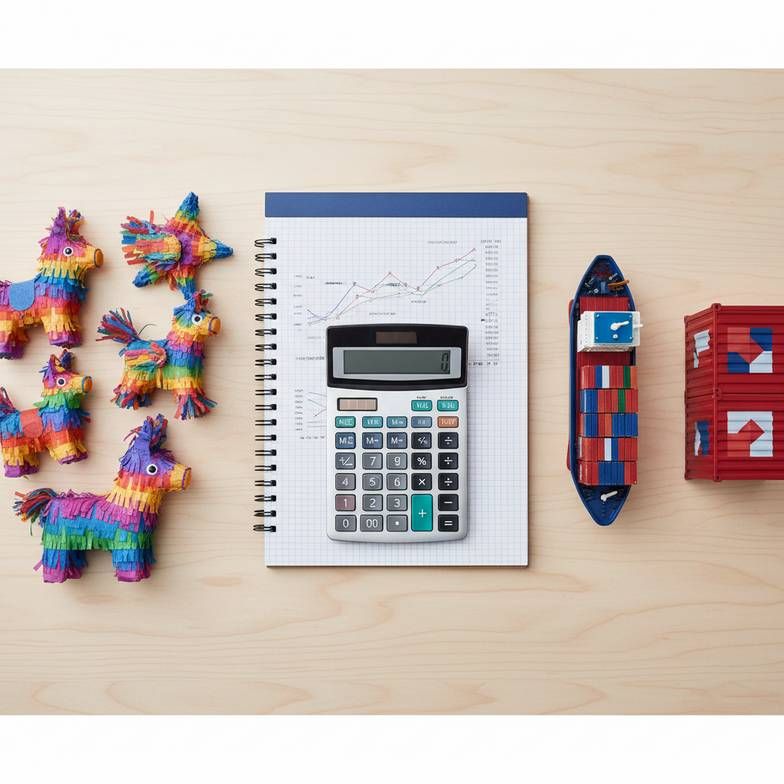
Now that you have the basic components, let's break down each one. You'll quickly see that the real work isn't in the math itself, but in asking your supplier the right questions to get accurate numbers for your calculation.
What Does the FOB Price Really Tell You About Piñata Costs?
You've found a supplier with an incredibly low FOB price and you think you've struck gold. But what if that low price comes with flimsy boxes that lead to damaged goods or inefficient packing that inflates your shipping bill? Suddenly, that "bargain" isn't such a good deal after all.
The FOB (Free On Board) price includes the piñata's unit cost and the expense of getting it packed and delivered to the departure port in China. It reflects trade-offs in materials, labor, and, most importantly for your total costs, packaging quality and efficiency.
Dive Deeper: The Hidden Costs in a "Cheap" FOB Price
A frequent question we get from new importers is about price matching. They'll show us a quote that's a few cents cheaper per unit and ask if we can do better. My answer always starts with a question back to them: "Have you asked about their carton dimensions and packaging methods?"
More often than not, a rock-bottom FOB price comes with hidden costs that show up later. Here’s what to look for:
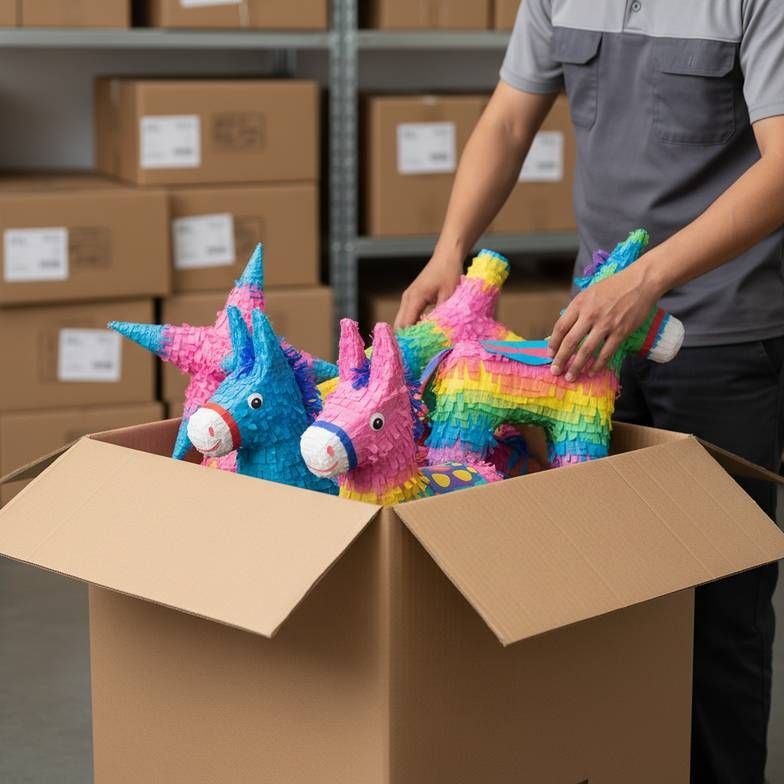
1. Poor Packaging and Damage Rates To lower the price, a supplier might use thinner, lower-grade cardboard for the master cartons. For most products, this might not be a huge issue. But piñatas can be both delicate and heavy in large quantities. Flimsy boxes are more likely to be crushed during transit, especially in LCL (Less than Container Load) shipments where your cartons are stacked with other goods.
- Real-World Impact: If you order 500 piñatas and 10% arrive crushed and unsellable, you haven't just lost 50 units. You've effectively increased the per-unit cost of your remaining 450 sellable piñatas by over 11%. That "cheaper" FOB price just became more expensive.
2. Inefficient Carton Packing The other way costs are cut is by rushing the packing process. Instead of carefully nesting or arranging piñatas to fit the maximum number into a carton, workers might just toss them in. This leaves a lot of empty, expensive air inside your boxes. As you'll see in the next section, you pay to ship that air.
I once worked with a new buyer who was laser-focused on shaving 20 cents off the FOB price of each piñata. They ended up switching to a different supplier who met their price target. A couple of months later, they called me, completely shocked. Their final shipping bill was nearly 40% higher than the estimates we had provided. The reason? Their new supplier used oversized, half-empty cartons, which ballooned their volumetric weight and freight cost.
A reliable supplier acts as a partner in cost management. We understand that our job isn't just to make the piñata, but to pack it in a way that minimizes damage and shipping costs for you. This means using sturdy, appropriately-sized cartons and training our team to pack for maximum density.
Why is Volumetric Weight the Biggest Factor in the Landed Cost of Imported Piñatas?
You already know that shipping will be a major expense. But you might be estimating that cost based on the actual, physical weight of the piñatas, which are famously light. This is a massive—and common—mistake that can lead to freight bills that are double or even triple what you expected.
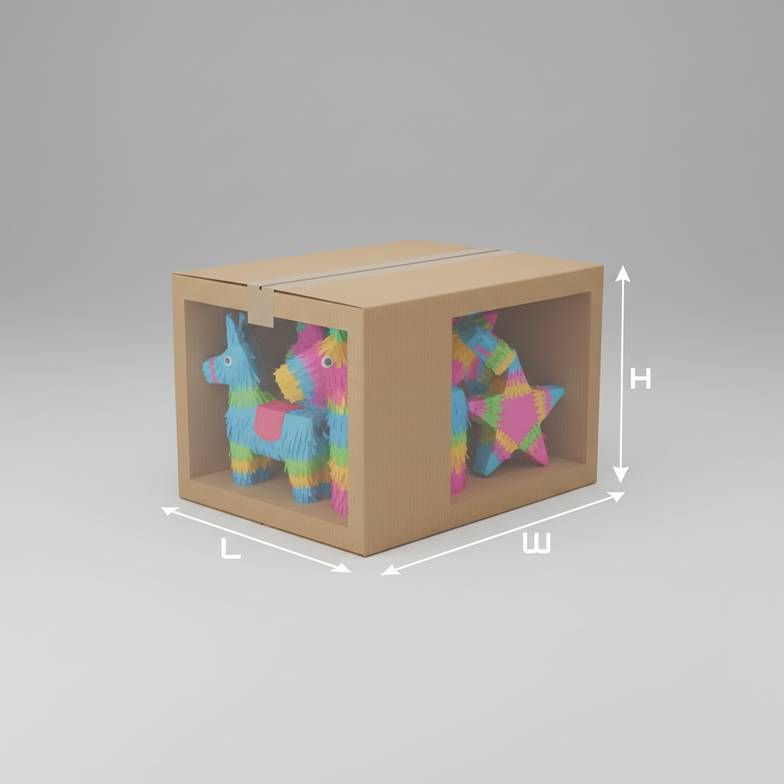
International freight carriers charge based on whichever is greater: the actual weight of your shipment or its volumetric weight (also called dimensional weight). Because piñatas are large, hollow, and light, their volumetric weight is almost always much higher, making it the single biggest driver of your shipping bill.
Dive Deeper: The Volumetric Weight Trap and How to Avoid It
Think of it from the carrier's perspective. An airplane or a shipping container has a limited amount of space. A shipment of feathers takes up a lot more space than a shipment of lead bricks with the same actual weight. Volumetric weight is how carriers account for the space your cargo occupies.
How to Estimate Your Volumetric Weight
Getting this right is crucial for an accurate calculation of the landed cost of imported piñatas. Your supplier should provide you with the exact outer dimensions (Length, Width, Height) and estimated gross weight of a master carton. With that information, you can get a freight quote.
The formula is simple:
> (Carton Length cm x Carton Width cm x Carton Height cm) / DIM Factor = Volumetric Weight in kg
The "DIM Factor" is a divisor set by the carrier. For international air freight, it's usually 5000. For sea freight or express couriers, it might be 6000 or another number. Always confirm with your freight forwarder.
Let's use a real-world example:
- You are shipping one carton of piñatas.
- Carton dimensions: 60cm x 50cm x 50cm
- Actual gross weight (piñatas + box): 8 kg
Now, let's calculate the volumetric weight for air freight:
- (60 x 50 x 50) / 5000 = 150,000 / 5000 = 30 kg
The carrier will compare the actual weight (8 kg) with the volumetric weight (30 kg) and charge you for the higher value. In this case, you are paying to ship 30 kg, not 8 kg. This is why inefficient packing is so devastating to your margins.
FOB vs. CIF: What It Means for Piñata Shipping
This brings us to Incoterms, which define who is responsible for what. The two most common are:
- FOB (Free On Board): You (the buyer) are responsible for arranging and paying for the international shipping from the origin port in China to your destination. You hire your own freight forwarder.
- CIF (Cost, Insurance, and Freight): The supplier arranges and pays for shipping to your destination port. They charge you for it in the total price.
For new importers, CIF seems easier. But for bulky items like piñatas, we often recommend buyers use FOB. Why? Because it gives you full control over the shipping costs. You can shop around for quotes from different freight forwarders and choose the one that gives you the best rate and service. With CIF, the supplier chooses the forwarder, and their priority might be convenience, not your bottom line.
How Do Customs and Duties Affect Your Final Piñata Cost?
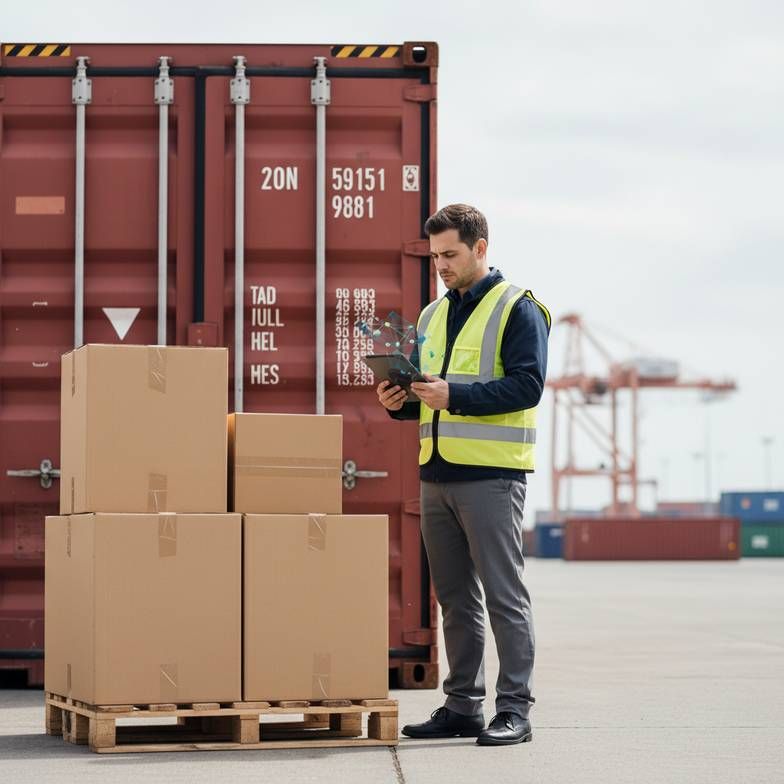
Your piñatas have finally arrived at a port in your country. You're almost there! But now you face the final hurdle: customs clearance. This is where incorrect paperwork or a misunderstood product classification can lead to frustrating delays and unexpected taxes.
Customs duties and taxes are government-levied fees based on the declared value and type of your imported goods. These fees are calculated using a specific HS (Harmonized System) code and can add a significant percentage to your total landed cost, making them a critical part of your calculations.
Dive Deeper: Navigating Customs and Final Fees
What many buyers overlook is that the customs process involves more than just one tax. It's a collection of fees that must be paid before your goods are released. A misstep here can hold up your entire shipment.
Finding the Right HS Code
The Harmonized System (HS) code is a universal code used by customs authorities worldwide to classify products. The code you use determines the duty rate you pay.
For piñatas, the classification usually falls under Chapter 95: Toys, Games and Sports Requisites. A commonly used code is in the 9505.90 category, which covers "Festive, carnival or other entertainment articles."
A good supplier should be able to tell you the HS code they use on their export documents from China. At LuckinDecor, this is standard information we provide on the commercial invoice. However, and this is extremely important:
> Disclaimer: Your supplier's HS code is for their export purposes. You, the importer, are ultimately responsible for verifying the correct HS code and corresponding duty rate with your country's customs authority or a licensed customs broker. Duty rates vary significantly by country and are subject to change.
Getting this wrong can lead to inspections, penalties, and your goods being re-classified at a much higher duty rate. Always do your due diligence.
The Anatomy of Final Import Fees
Your final bill from your customs broker will likely include several line items. These are all part of your total landed cost.
| Fee Type | Description |
|---|---|
| Customs Duty | The main tax, calculated as a percentage of your goods' value. |
| VAT / GST | Value Added Tax or Goods and Services Tax, common in many countries outside the US. |
| Brokerage Fee | The fee you pay your customs broker for handling the paperwork and clearance process. |
| Port / Handling Fees | Charges from the port or warehouse for moving and handling your container or cartons (e.g., Terminal Handling Charges). |
| Merchandise Processing Fee (MPF) | A specific fee for imports into the United States. |
| Insurance | While optional, it's highly recommended. It protects you against loss or damage during transit. |
Individually, some of these fees seem small. But added together, they form the final piece of your cost puzzle. The only way to get an accurate estimate is to provide your commercial invoice, packing list, and bill of lading to a customs broker and ask for a complete quote.
Frequently Asked Questions
What's a good benchmark for shipping costs as a percentage of the product cost for piñatas?
There is no reliable benchmark because rates fluctuate wildly. For bulky, low-value items like piñatas, it's not uncommon for shipping to cost anywhere from 30% to over 100% of the FOB value, especially for smaller LCL shipments. Your best bet is to get a real-time quote.
Can my supplier handle all the shipping and customs for me?
Yes, this is possible using Incoterms like DDP (Delivered Duty Paid), where the supplier manages the entire process to your door. While it's the simplest option for you, it is usually more expensive because the supplier takes on all the risk and complexity and adds a margin for their service.
How does order quantity affect my per-unit landed cost?
Order quantity has a massive impact. Shipping a full container (FCL) is far more cost-effective on a per-unit basis than shipping a few pallets (LCL). If you can, consolidating orders to fill a container will dramatically reduce the per-unit landed cost of imported piñatas.
Why can't I just use an online landed cost calculator?
Online calculators are too generic. They are designed for standard-sized goods and cannot account for the unique, critical variables of importing piñatas, such as the massive impact of volumetric weight, packaging density, potential damage rates from poor packing, and supplier-specific carton choices.
Conclusion
Calculating the landed cost of imported piñatas is far more than just plugging numbers into a formula. It's a strategic process of risk management. As we've seen, the final per-unit cost you pay is determined less by the initial FOB price and more by complex variables like packaging density, the dominance of volumetric weight, and the accuracy of your customs documentation. The key is to see beyond the price tag and evaluate a supplier based on their ability to help you manage these total costs. A good partner provides the transparent data you need to make an informed, profitable decision.
If you are planning a wholesale or bulk piñata order and need a supplier who understands these logistical details, we're here to help. Contact us at LuckinDecor to discuss your sourcing needs and get the transparent data required to accurately plan your import.