Trying to buy piñatas in bulk from China can feel overwhelming, especially for first-time importers. You're trying to find a quality product at a good price, but you're also worried about communication gaps, quality control failures, and shipping disasters. This uncertainty can lead to costly mistakes that eat into your profits before the products even hit your shelves. The solution isn't a magical, one-size-fits-all checklist, but a smart decision-making framework to guide your sourcing process.
To successfully buy piñatas in bulk from China, an importer must first define their specific market's requirements for price, quality, and design. The process then involves specifying materials and construction that fit this context, thoroughly vetting potential suppliers for their communication and production capabilities, managing the sample and production phases with clear checkpoints, and planning for durable packaging and logistics to ensure the products arrive safely.
That’s the high-level view. But as any experienced buyer knows, the real challenges are in the details. The goal of this guide is to move beyond a simple to-do list and teach you how to think like a seasoned importer. Let's dive into the critical decisions you'll need to make.
Why Is Market Fit More Critical Than Price When You Buy Piñatas in Bulk?
It’s easy to get fixated on finding the lowest possible unit price. But what if that "cheap" piñata is all wrong for your customers? A common pitfall I see is importers sourcing a product that doesn't align with their sales channel, leading to slow sales, high returns, or negative reviews. The most profitable sourcing strategy starts with your end customer, not the supplier's price list.
Focusing on market fit over absolute price ensures you're investing in a product that will actually sell. A piñata perfect for a premium party boutique will likely fail in a discount store, and vice versa. Matching the product's design, complexity, and quality to your specific sales channel is the foundation of a successful bulk purchase.
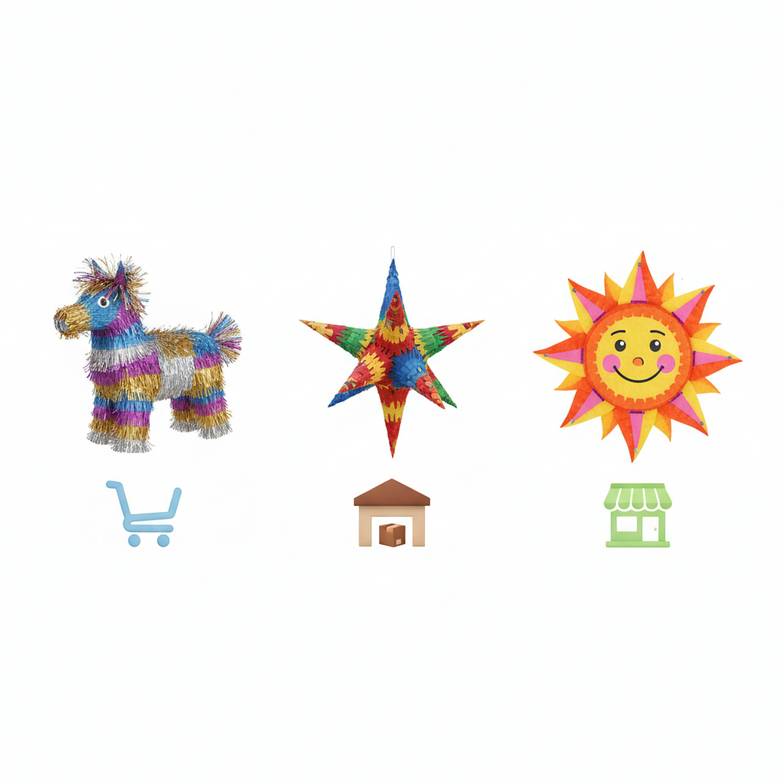
Dive Deeper: Aligning Product with Your Sales Channel
The "best" piñata is a relative term. Its quality is defined by its suitability for your specific business context. An experienced buyer focuses on matching product attributes to their sales environment, while a novice often just hunts for the lowest FOB price. Let's break down how to approach this.
Defining Your Sales Channel Needs
Where you sell your piñatas dictates everything. The requirements for an e-commerce store are vastly different from those for a physical party supply wholesaler.
- Online Retail (e.g., Amazon, your own website): Your product needs to look great in photos and survive being shipped multiple times—first in a container, then from a warehouse to the end customer. This means packaging is critical. Individual boxing with protective filler might be necessary, adding to the cost but reducing damage-related losses. Visual appeal and perceived value are high, so more intricate designs can perform well.
- Wholesale Distributors: Your customers are retailers who need a good margin. Price becomes more sensitive. Products are often sold in case packs, so individual retail packaging might be less important than bulk packaging that is easy to handle and store in a warehouse. A balanced assortment of classic, high-volume designs is often safer than niche, trendy ones.
- Brick-and-Mortar Retail (e.g., party stores, supermarkets): Shelf appeal is king. The piñata must grab attention from a distance. Bright colors, popular characters, and clear sizing are important. Since customers can physically inspect the product, the tactile feel of the materials matters. They might be transported with less packaging, often just in a master carton, to keep costs down.
Here’s a simple table to illustrate the trade-offs:
| Sales Channel | Key Priority | Ideal Packaging | Design Focus |
|---|---|---|---|
| Online Retail | Durability & Photogenic | Individual Box | Intricate, High Perceived Value |
| Wholesale | Cost-Effectiveness | Bulk Case Packs | Classic, High-Volume Sellers |
| Party Store | Shelf Appeal | Minimal / Master Carton | Bright, Eye-Catching, Themed |
Understanding Customer Expectations
A common question we receive from importers is, "What's your best-quality piñata?" My answer is always another question: "Who is your customer?"
A parent shopping at a dollar store for a 5-year-old's party has different expectations than someone planning a stylish bachelorette party. The dollar-store customer needs something affordable that works. The bachelorette party planner may be willing to pay more for a unique, Instagram-worthy design.
Before you even contact a supplier, define your target customer's acceptable quality trade-offs. Are they willing to pay a premium for a piñata made from thick, virgin-pulp paperboard that can hold 5 pounds of candy? Or do they want the most affordable option, even if it's made from lighter, recycled materials and holds just 2 pounds? Answering this question will guide all your specification decisions.
How Do You Evaluate a Piñata's True Quality Before You Buy in Bulk?
Supplier photos and marketing descriptions can be misleading. A piñata that looks stunning online could arrive as a flimsy, poorly constructed disappointment. Relying solely on a supplier's claims without independent verification is a major risk. You could end up with a container of products that are unsafe, don't function as expected, or get damaged in transit.
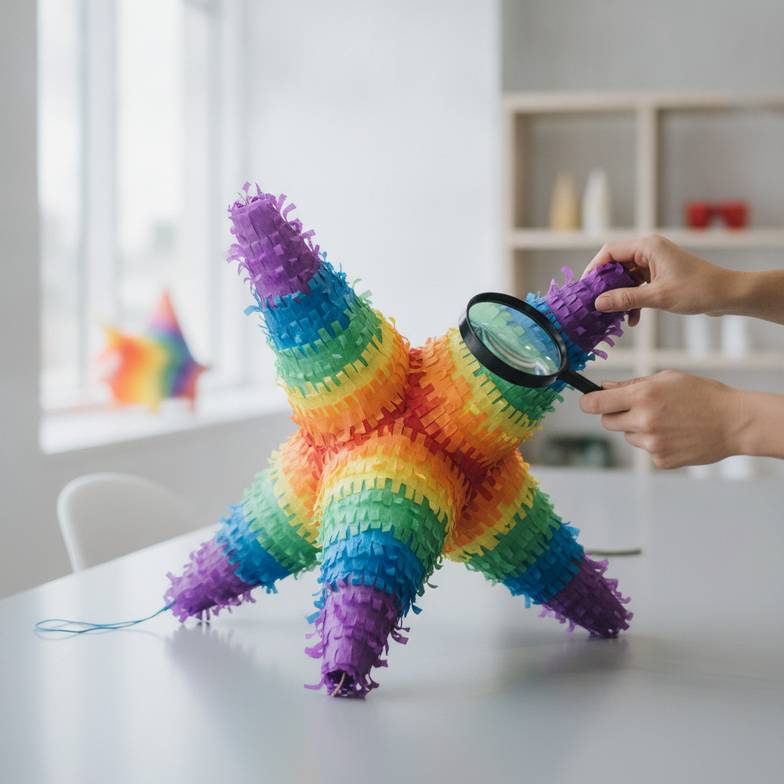
To properly evaluate quality, you must move beyond visuals and focus on tangible, functional attributes through a structured sample evaluation process. This involves testing the product's material, construction, and safety features yourself before committing to a large order.
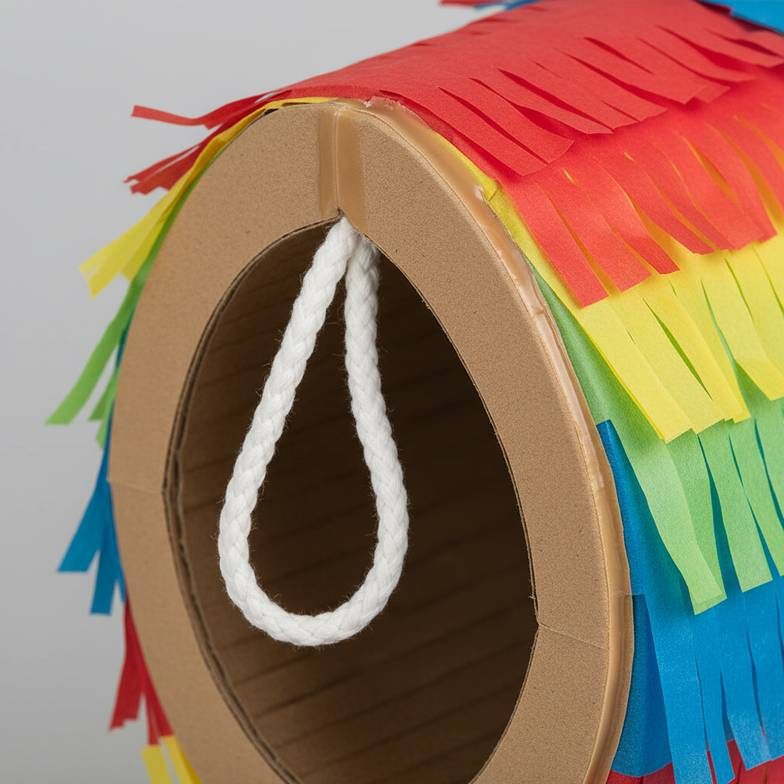
Dive Deeper: The Sample Evaluation Checklist
When you receive samples, don't just look at them—put them to the test. Your goal is to simulate the entire product lifecycle, from filling to breaking. Here’s what we advise our professional buyers to focus on.
Material Matters: Recycled vs. Virgin Pulp
The core of a piñata is typically made from paperboard. The two main types are recycled and virgin pulp.
- Recycled Paperboard: This is the most common and cost-effective option. It's perfectly suitable for many markets. However, its strength and rigidity can vary. When evaluating a sample, check for consistency. Does it feel sturdy or flimsy? Is it prone to denting?
- Virgin Pulp Paperboard: This is stronger, more rigid, and offers a more uniform, premium feel. It's a good choice for larger piñatas or for markets where customers expect higher durability. Of course, it comes at a higher cost.
Ask the supplier to specify the material used. A good supplier should be able to provide details on the paperboard's grammage (grams per square meter, or GSM). A higher GSM generally indicates a thicker, more robust material.
Construction, Capacity, and the "Fun Factor"
A piñata has two jobs: hold candy, and then break in a satisfying way. Your evaluation should test both.
- The Hanging Loop: This is a critical failure point. Is it just glued on, or is it reinforced and integrated into the piñata's structure? Fill the sample piñata with weights (we use bags of sand) to its stated capacity and hang it for 24 hours. A weak hanging loop is a deal-breaker.
- The Filling Hole: Is it easy to find and use? Is the flap secure enough that it won't pop open prematurely?
- Structural Integrity & Breakability: This is the "fun factor." A piñata that breaks on the first hit is a disappointment. One that refuses to break is frustrating. The ideal is a piñata that can withstand a reasonable number of hits from its target age group before breaking open. For example, a child's piñata might be designed to break after 5-7 hits. The only way to test this is to, well, test it! Document how many hits it takes to break.
Safety and Compliance Verification
For any product intended for children, safety is non-negotiable. While a supplier may claim their products are "safe," professional buyers must ask for documentation.
- Material Safety: Ask if the paper, glue, and dyes used comply with relevant safety standards for your market (e.g., ASTM F963 in the US, EN 71 in Europe). Request test reports for verification.
- Sharp Edges: Run your hands over the piñata. Are there any sharp staples or wires used in its construction? Any hard, pointed edges from the internal structure? These are red flags.
Treat certifications as documents you need to verify, not just marketing claims. A reliable supplier will have these reports ready or be willing to conduct testing.
What Should You Look for in a Chinese Piñata Supplier?
With so many suppliers available on platforms like Alibaba, how do you choose the right partner? Many importers get stuck comparing suppliers based on price and product photos alone. This approach overlooks the most important factor: the supplier's capability as a business partner. A bad partner can cause production delays, quality issues, and communication nightmares, no matter how low their price is.
The best suppliers are those who demonstrate expertise not just in manufacturing, but in communication, process management, and international logistics. You are not just buying a product; you are buying a production and delivery service.
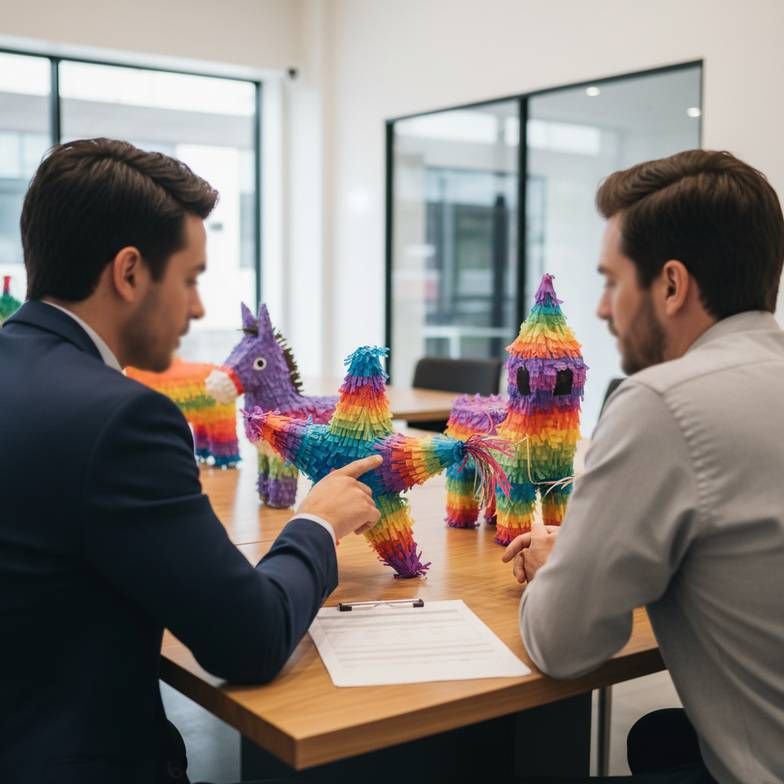
Dive Deeper: Vetting Your Sourcing Partner
Evaluating a supplier is like a job interview. You need to assess their skills, experience, and reliability. Here are the key areas I recommend probing.
Communication and Responsiveness
Clear, timely, and professional communication is the bedrock of a successful sourcing relationship.
- Responsiveness: How quickly do they respond to your inquiries? A 24-hour turnaround is a reasonable expectation. Consistently slow responses are a major warning sign.
- Clarity: Can they answer your technical questions clearly in English? Or do they just send back generic answers and price lists? A good sales rep will ask you clarifying questions about your market and requirements. They want to prevent problems, not just make a sale. I always tell buyers that a good supplier should ask you as many questions as you ask them.
- Problem Solving: Present them with a hypothetical problem. For example, "What would you do if a quality inspection found that 10% of the piñatas had weak hanging loops?" Their answer will reveal their approach to quality control and customer service.
Production and Quality Control Processes
You need to understand how they ensure quality, not just trust that they will.
- Ask about their QC process: Do they have incoming quality control (IQC) for raw materials? Do they have in-process quality control (IPQC) during assembly? What does their final quality control (FQC) checklist look like before packing? A mature factory will have a documented process.
- Sample Process: How do they handle custom designs and pre-production samples? A professional supplier will have a clear, multi-step process for creating and approving samples to ensure the final product matches your expectations.
- Third-Party Inspections: Are they open to you hiring a third-party inspection company to check the goods before shipment? A confident supplier will always welcome this. If they resist, consider it a red flag.
Logistics and Packaging Expertise
Getting the product made is only half the battle. Getting it to your warehouse intact is the other half. Piñatas are bulky and relatively fragile.
- Carton Specifications: Ask about the master cartons they use. What is the material (e.g., 5-ply corrugated)? How are the piñatas arranged inside to prevent crushing?
- Loading Plan: A great supplier can even provide a container loading plan to maximize space and ensure weight is distributed properly, which can save you a surprising amount on freight costs.
- Experience with Your Country: Have they shipped to your country before? They will be familiar with the required shipping documents and any specific port regulations, which can prevent costly delays.
Choosing a partner with proven expertise in these areas is just as important as choosing the right product.
Frequently Asked Questions
How do I manage a custom piñata design process?
The key is clear communication and a structured approval process. Start by providing a detailed design brief with images, dimensions, color codes (like Pantone), and functional requirements. Your supplier should then create a "pre-production sample" (PPS) for your approval. Only after you sign off on the PPS should bulk production begin.
What is a realistic Minimum Order Quantity (MOQ) when you buy piñatas in bulk?
MOQs vary widely depending on the supplier and the complexity of the piñata. For standard, stock designs, you might find MOQs as low as 300-500 pieces per design. For fully custom designs, expect higher MOQs, often 1,000 pieces or more, as the supplier needs to cover the costs of developing new molds and production setups.
How can I ensure my piñatas aren't damaged during shipping?
Packaging is your primary defense. Discuss packaging options with your supplier. For online retail, individual boxing is best. For wholesale, insist on strong, multi-ply master cartons. Specify that cartons should not be over-stuffed and should be loaded carefully into the container to prevent crushing. Using a third-party inspector can also help verify proper packing before shipment.
What do I do about product safety certifications?
Ask potential suppliers for existing test reports for standards relevant to your market (e.g., ASTM F963, EN 71). Be sure to check that the report is recent and applies to the specific materials being used in your product. If they don't have one, you can commission a test from a lab like SGS, TUV, or Intertek as part of your due diligence.
Conclusion
Successfully sourcing piñatas from China requires shifting your mindset from simply ticking off a checklist to making a series of strategic, risk-based decisions. The most common mistake is chasing the lowest price instead of focusing on the right product-market fit. By clearly defining the needs of your sales channel, rigorously evaluating samples for functional quality, and vetting suppliers as long-term partners, you can build a resilient and profitable supply chain. The goal is not just to buy piñatas in bulk; it's to invest in the right products that will delight your customers and grow your business.
If you are looking for a partner to help you navigate these decisions and source the right piñatas for your market, our team at LuckinDecor is here to help. Contact us to discuss your specific bulk ordering needs.