Sourcing party supplies seems straightforward, but when it comes to ordering mini piñatas in bulk, many buyers find their profit margins shrinking unexpectedly. You might choose a product that looks great in a photo, only to discover it's too expensive to ship, doesn't display well on your shelves, or simply doesn't match what your customers actually want. This guide is designed to help you navigate the critical decisions of size, set configuration, and packing to ensure your inventory is profitable, shippable, and ready for retail success.
For retail buyers, sourcing mini piñatas in bulk is a strategic exercise in balancing trade-offs. The optimal choice is not a single "standard" size or packing method, but a calculated combination of product dimensions (perceived value vs. shipping cost), set counts (to increase transaction value), and packaging (for logistics and merchandising) that aligns perfectly with your specific sales channel and target market.
Making the right choices on these three core elements—size, sets, and packing—is the difference between a bestseller and a clearance-bin dud. Let's break down each factor so you can build the ideal mini piñata offering for your business and customers.
How Do You Choose the Right Mini Piñata Size?
You need to select a size for your mini piñatas, but is bigger always better? A larger piñata certainly has more shelf presence, but it can also lead to surprisingly high international shipping charges that eat into your profit before the product even lands in your warehouse.
The right mini piñata size strategically balances its perceived retail value with its shipping volume. To find the most profitable option for your market, you must evaluate dimensions not just in inches or centimeters, but in terms of how much space it commands on a shelf versus its logistical cost.
The "Perceived Value" vs. "Cubic Weight" Trade-Off
International shipping carriers have a clever way of charging for space: dimensional (or cubic) weight. They calculate a "weight" based on a package's length, width, and height. If this dimensional weight is greater than the actual weight of the package, you pay for the space it takes up, not how little it weighs. Lightweight, bulky items like piñatas are prime candidates for this.
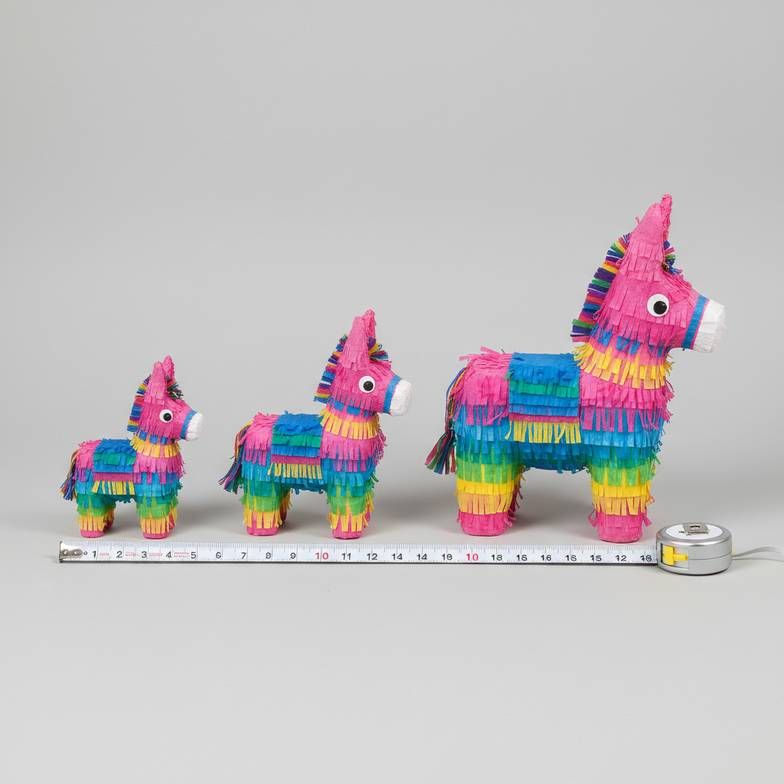
From my experience working with buyers, this is a frequent point of confusion. A buyer might compare a 5-inch piñata to a 7-inch one. The 7-inch version looks significantly bigger and feels like it could command a higher retail price—that's perceived value. However, that extra two inches in height, width, and depth can dramatically increase the carton size and, therefore, the shipping cost per unit.
Think of it this way:
- A small, dense piñata might be cheap to ship but look underwhelming on a shelf, limiting its retail price.
- A large, hollow piñata might look impressive but incur such high freight costs that your landed cost makes it unprofitable.
The sweet spot is a size that looks substantial to the end customer but remains efficient to pack and ship. This is a conversation we have with almost every new retail partner. We often mock up carton configurations to show them exactly how a half-inch change in product design can impact their cost per unit.
Material Choices and Their Impact
The materials used also play a key role. A piñata made from thicker, heavier cardboard will be more durable, but it will also increase the actual weight. The type of decorative material—crepe paper, tissue paper, or metallic fringe—also adds slight variations in weight and volume.
| Feature | Option A: Thinner Cardboard | Option B: Thicker Cardboard |
|---|---|---|
| Durability | Lower; may be prone to crushing | Higher; better protection during transit |
| Actual Weight | Lighter | Heavier |
| Unit Cost | Lower | Slightly higher |
| Best For | Cost-sensitive markets; experienced shippers | E-commerce; markets where durability is key |
The key is to discuss these specifications with your supplier. Ask for the planned carton dimensions and weight for your desired quantity. A good partner will help you analyze the trade-offs to find a size that protects your margins.
What's the Ideal Number of Mini Piñatas in a Set?
Offering mini piñatas in sets is a fantastic strategy to increase your average order value. But what's the magic number? Guessing wrong can leave you with inventory that doesn't align with what customers need—for instance, a beautiful set of 5 piñatas for a party that will have 8 kids.
The ideal number for your mini piñatas in bulk sets should be driven by your target customer's end use and your retail pricing strategy. It's not about accepting a supplier's default set count; it's about defining what will sell best in your store.
Aligning Set Counts with Customer Behavior
The first question to ask is: How will my customer use these? The answer dictates the ideal set count.
- Party Favors: This is the most common use. In many Western markets, kids' birthday parties often have between 8 and 12 guests. Offering sets of 6, 8, 10, or 12 directly meets this need. I once worked with a buyer who was selling sets of 5. After getting feedback, they switched to sets of 8 and saw a significant sales lift because it was just a more practical number for their customers.
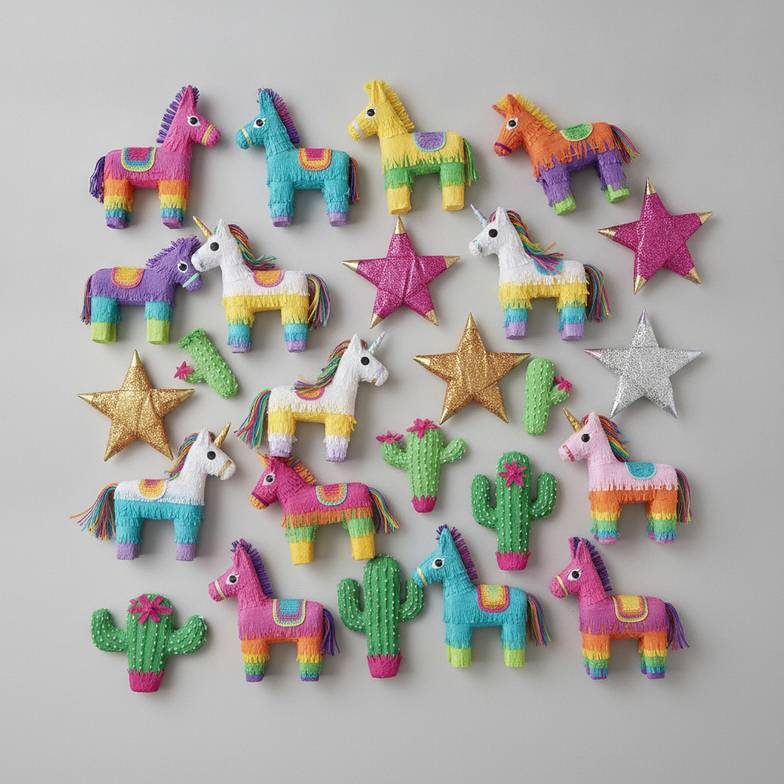
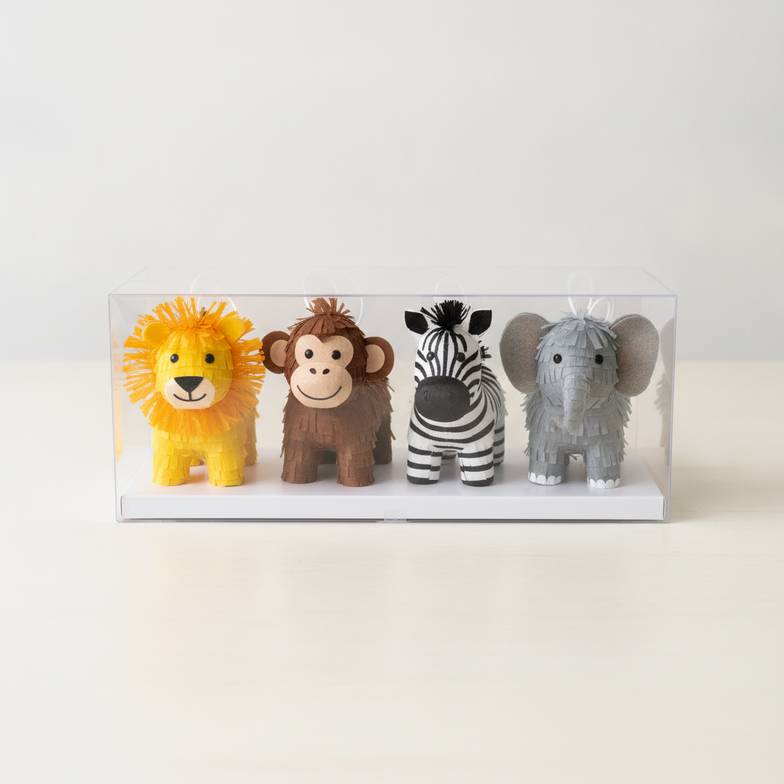
- Table Decorations: For customers using them as centerpieces or décor, smaller sets are often better. A set of 3 or 4 themed piñatas (e.g., a cactus, a llama, and a sun for a fiesta theme) creates a complete look.
- Holiday & Seasonal Decor: For holidays like Halloween or Christmas, customers might want to hang multiple mini piñatas. Offering a mixed set of 6 different spooky or festive designs can be very appealing.
Consider offering both uniform sets (e.g., 8 identical unicorn piñatas) for party favors and assortment sets (e.g., 4 different jungle animals) for decoration. This broadens your appeal.
Using Sets to Hit Retail Price Points
Set configuration is also a powerful merchandising tool. You can engineer your sets to hit popular retail price points that encourage purchases.
- Impulse Buy Tier (e.g., under $10): A small set of 3 or 4 mini piñatas packed in a simple polybag can be an easy add-to-cart item.
- Standard Tier (e.g., $15-$20): A set of 8 party favors in a retail-ready box fits perfectly here. It feels like a complete solution for a party.
- Value Tier (e.g., $25+): A large pack of 12 or even 24 mini piñatas can appeal to event planners, teachers, or parents hosting a large gathering.
By deciding on your target retail price first, you can work backward with your supplier to determine the optimal set count, materials, and packaging to meet that goal profitably.
Which Packing Method is Best for Sourcing Mini Piñatas in Bulk?
You've finalized the perfect size and set count. Now for the last piece of the puzzle: packing. Choosing the cheapest bulk carton might seem like a cost-saving measure, but it can be a costly mistake, leading to damaged products and a terrible unboxing experience for your customer.
The best packing method for your mini piñatas in bulk is a strategic decision that must balance logistics efficiency, merchandising needs, and your primary sales channel. The right choice depends entirely on whether you're selling online, in a physical store, or to other businesses.
Packing for Different Sales Channels
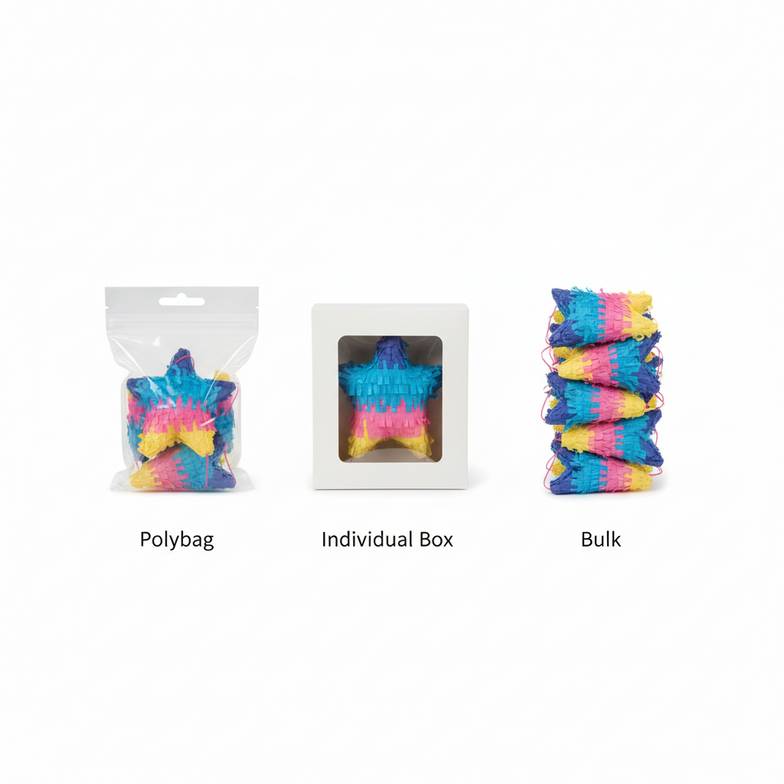
There is no single "best" way to pack mini piñatas. A frequent mistake we see is buyers for online stores choosing packaging designed for physical retail, and vice versa. Each channel has unique demands.
Here’s a breakdown of the most common options and who they're for:
| Packing Method | Pros | Cons | Best Suited For |
|---|---|---|---|
| Bulk Master Cartons | Lowest unit cost; most freight-efficient. | No individual protection; requires manual sorting and repacking at your warehouse. High risk of damage. | Wholesalers selling to other businesses; discount retailers who sell from large bins. |
| Polybags with Header Cards | Low cost; retail-ready for peg hooks; lightweight. | Minimal protection from crushing; can look cheap; not ideal for shipping individually. | Brick-and-mortar stores with extensive pegboard displays; budget-conscious party sections. |
| Individual Retail Boxes | Excellent protection; premium look and feel; stackable on shelves; perfect for e-commerce. | Highest unit cost; adds to shipping weight and volume; requires more design work. | Online sellers (Amazon, Shopify); boutique gift shops; retailers focused on brand experience. |
The Unboxing Experience and E-commerce
For online retailers, packaging is part of your marketing. A crushed piñata arriving in a flimsy bag is a recipe for a bad review. A sturdy, attractively printed box, on the other hand, creates a positive "unboxing experience" that builds brand loyalty.
When we work with e-commerce clients, we focus heavily on two things:
- Protection: The box needs to be strong enough to withstand the chaos of a modern logistics network, including a final drop on the customer's doorstep. We often recommend a specific cardboard grade and sometimes even internal supports.
- Mailer Fit: We can design the retail box to fit snugly inside standard-sized shipping mailers or boxes. This simple step can save you a significant amount on fulfillment and postage costs by minimizing wasted space and avoiding dimensional weight surcharges from carriers like USPS, FedEx, or UPS.
Don't treat packaging as an afterthought. It's a critical component of your product that directly impacts your costs, your brand perception, and your customer satisfaction.
Frequently Asked Questions
What is a common starting size for mini piñatas?
While there's no "standard," a common range for mini piñatas is between 4 to 7 inches (10-18 cm). A 5-inch model often provides a good balance of visual appeal and shipping efficiency. However, the best approach is to evaluate your specific market and logistics costs rather than relying on a default size.
Can I mix and match designs within a bulk order of mini piñatas?
Yes, absolutely. As a supplier, we frequently create orders with assorted designs. You can create a themed set (e.g., four different dinosaurs) or request a specific ratio of designs within a larger bulk order. This is a great way to offer variety without over-ordering on any single SKU.
How does customization affect the cost of mini piñatas in bulk?
Customization, such as a unique shape, specific colors, or branded packaging, involves creating new molds and print setups. This typically requires a higher minimum order quantity (MOQ) and adds a one-time setup fee. The per-unit cost may be slightly higher, but it allows you to create a truly unique product for your brand.
What's the typical lead time for a wholesale order?
Lead time depends on order complexity and volume. For existing designs, production might take 30-45 days. For fully custom orders, you should add another 2-3 weeks for design, sampling, and approval. Always factor in 30-40 days for sea freight from China to North America or Europe.
How can I verify the quality of the piñatas before placing a large order?
Always request pre-production samples. This allows you to physically inspect the size, materials, colors, and construction quality. For a large order, you can also arrange for a third-party inspection service to check the products at the factory before they are shipped. This is a standard practice we support for our B2B clients.
Conclusion
Successfully sourcing mini piñatas in bulk is less about finding a catalog product and more about making a series of strategic decisions. The right choice is a careful calculation where size balances visual appeal with shipping costs, set counts are aligned with customer needs and your pricing strategy, and the packaging is optimized for your specific sales channel. By thinking through these factors, you move from simply buying a commodity to intelligently sourcing a product engineered for profitability. This proactive approach minimizes risks and ensures the inventory you import is set up to sell.
When you're ready to find the optimal combination of size, sets, and packing for your business, reach out. Our team at LuckinDecor has helped hundreds of buyers navigate these choices, and we're here to help you develop a mini piñata program that delights your customers and strengthens your bottom line.